
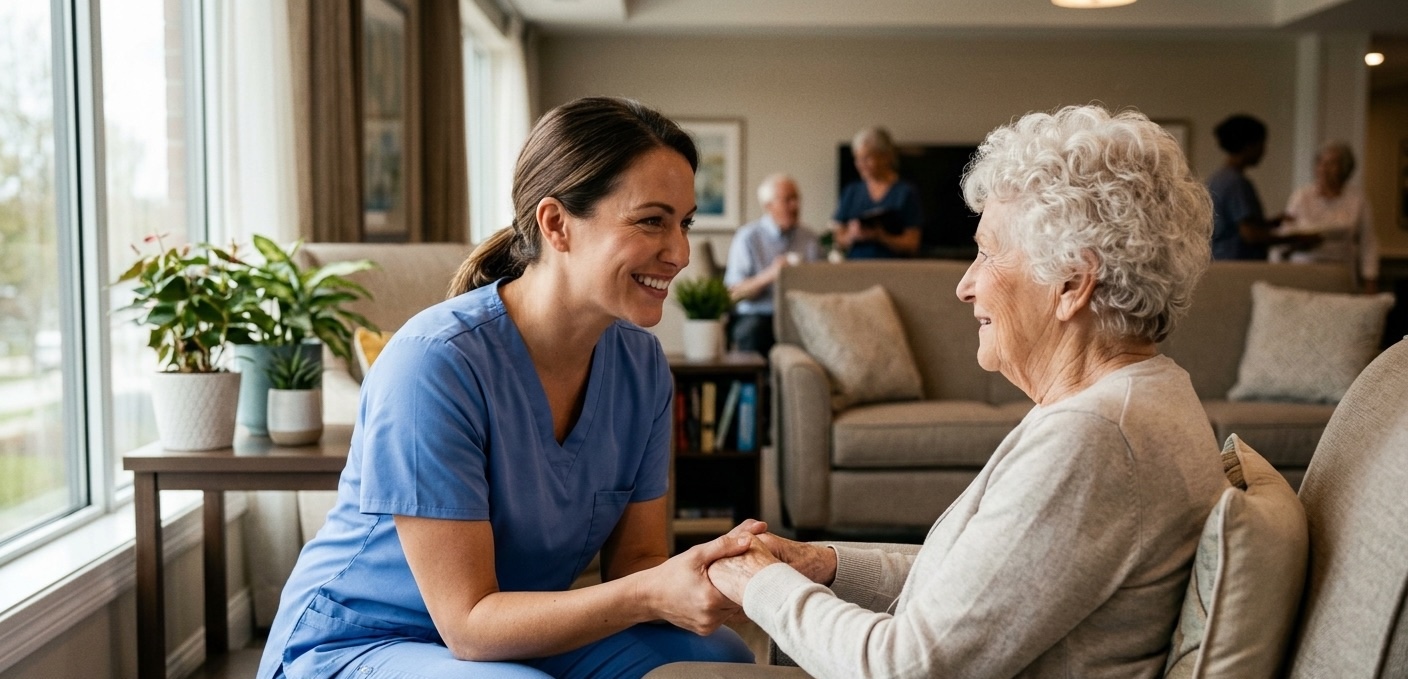
For families navigating an Alzheimer’s or dementia diagnosis, the late afternoon often brings “sundowning”—a period of increased confusion, anxiety, and agitation. While many families initially look for the newest building or flashiest amenities to solve these behavioral challenges, the clinical reality is that the environment is defined by who you are with and who is looking after you.
At CareOne, we recognize that reducing the stress of dementia isn’t about the architecture; it’s about the human element. Our Harmony Village model is built on two clinical pillars: Cognitive Peer Grouping and Specialized Staffing. By focusing on these social and clinical dynamics, we help mitigate the triggers of sundowning and provide a more stable, dignified life for our residents.
What is the best environment for someone with dementia?
The best environment for someone with dementia is a specialized setting where they are surrounded by peers at a similar cognitive stage and supported by a dedicated clinical team. By matching residents with others who share their level of communication and ability, the environment becomes naturally less frustrating, reducing the social isolation and confusion that often lead to sundowning and behavioral agitation.
The Harmony Village Difference: Clinical Insight Over Physical Frills
Sundowning is often a reaction to a world that has become too complex or confusing. When a person with dementia is placed in a generic senior care facility where they cannot relate to those around them, their anxiety peaks as the day winds down. Harmony Village solves this through a sophisticated social and clinical approach.
1. The Power of Cognitive Peer Grouping
In a traditional memory care setting, it is common to find residents in the early stages of memory loss living alongside those in very advanced stages. This “mixed-level” environment is often a primary trigger for agitation.
- For higher-functioning residents: Seeing advanced decline in their neighbors can cause profound “pre-grief” and anxiety.
- For lower-functioning residents: Trying to keep up with fast-paced conversations or complex activities can lead to “sensory overload,” which manifests as sundowning in the evening.
At CareOne, Harmony Village neighborhoods group residents with cognitive peers. This ensures that the social “vibe” of the room matches the resident’s current ability. When everyone in the room is moving at the same pace, the social pressure lifts, the frustration disappears, and the late-afternoon hours become significantly calmer.
2. Specialized Memory Care Experts
You cannot manage the complexities of dementia with a “generalist” approach. A building is only as good as the team inside it. While a standard nursing home or assisted living facility might have staff trained in general vitals and physical care, Harmony Village is staffed by professionals who specialize exclusively in memory loss.
Our team includes experts who are trained to spot the “micro-cues” of sundowning before a full episode occurs. Instead of relying on medication to manage evening agitation, our staff uses clinical interventions—such as personalized engagement, redirection to a familiar task, or one-on-one companionship—to soothe a resident’s anxiety. Having a memory care expert on-site means your loved one is being “read” and understood by someone who knows their specific history and triggers.
Comparing the Approach: Clinical Substance vs. General Care
When choosing between assisted living facilities for a loved one with dementia, it’s important to look past the lobby and look at the resident-to-staff dynamics.
| Care Priority | Standard Memory Care Unit | CareOne Harmony Village |
| Social Dynamics | Random placement; residents of all cognitive levels are mixed together. | Cognitive Peer Grouping; residents live with others at a similar stage of their journey. |
| Staffing Expertise | General caregivers who float between different departments. | Dedicated Specialists; staff members are experts in dementia and behavioral management. |
| Evening Support | Reactive care; staff responds after sundowning agitation begins. | Proactive Engagement; specialized routines designed to ease the transition into the evening. |
| Primary Focus | Safety and basic physical needs. | Emotional ROI; reducing frustration and fostering a sense of belonging. |
Why “Community” is the Best Medicine
For a senior in Livingston, Haddonfield, or any of our New Jersey locations, the transition to memory care is about reclaiming a sense of “normal.” When a resident moves into Harmony Village, they aren’t just moving into a senior care facility—they are joining a specialized neighborhood where they are understood.
By removing the frustration of being “out of sync” with their neighbors and providing the oversight of clinical experts, we create an environment that naturally lowers the temperature of the day. We don’t need a brand-new building to provide world-class care; we need the right people and the right peer groups.
If you are seeing the signs of sundowning in your loved one, it may be time to move beyond general care. Contact CareOne today to learn how our Harmony Village model can provide the specialized support your family needs.
